
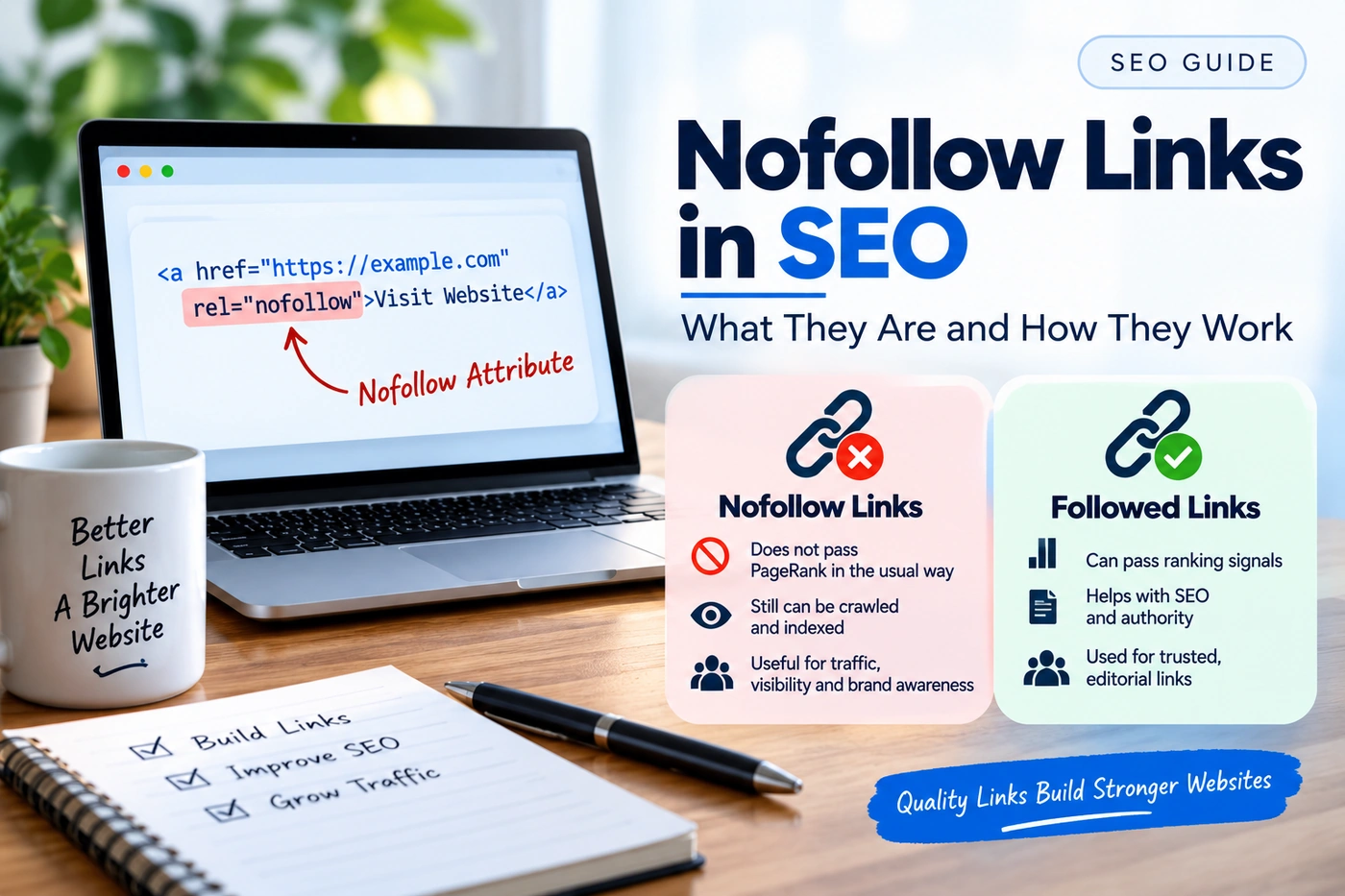
Nofollow links are an important part of SEO and link building. They can help bring visitors to your website and increase your online visibility, but they work differently from regular followed links. In this guide, we’ll explain what they are, how they work, when to use them, and why they can still be useful for your SEO strategy.
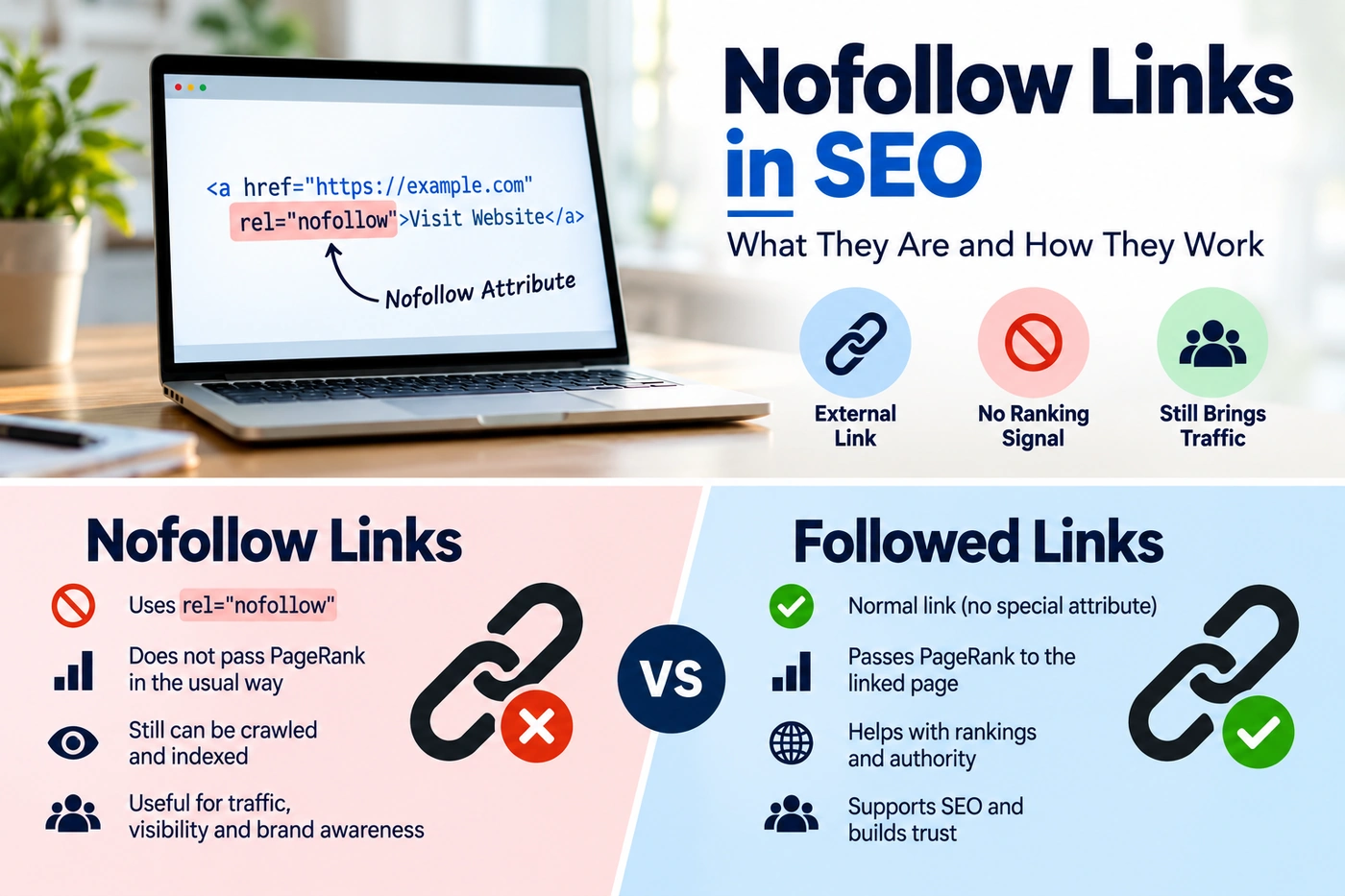
What Are Nofollow Links?
Link building plays an important role in improving search visibility and attracting organic traffic. Among the different types of links, nofollowed links are often misunderstood. Do they still matter for SEO? When should you use them? In this guide, we’ll explain how they work, when they are useful, and how they can support a natural SEO strategy.
How Do Nofollow Links Work?
- Not a normal endorsement: The link indicates that the website owner does not want to endorse the destination in the usual way.
- No traditional PageRank passing: It is not treated like a standard followed link for passing PageRank.
- Still a useful signal: Search engines may still consider the link for crawling and indexing purposes.
Users can still click the link and visit the destination page normally.
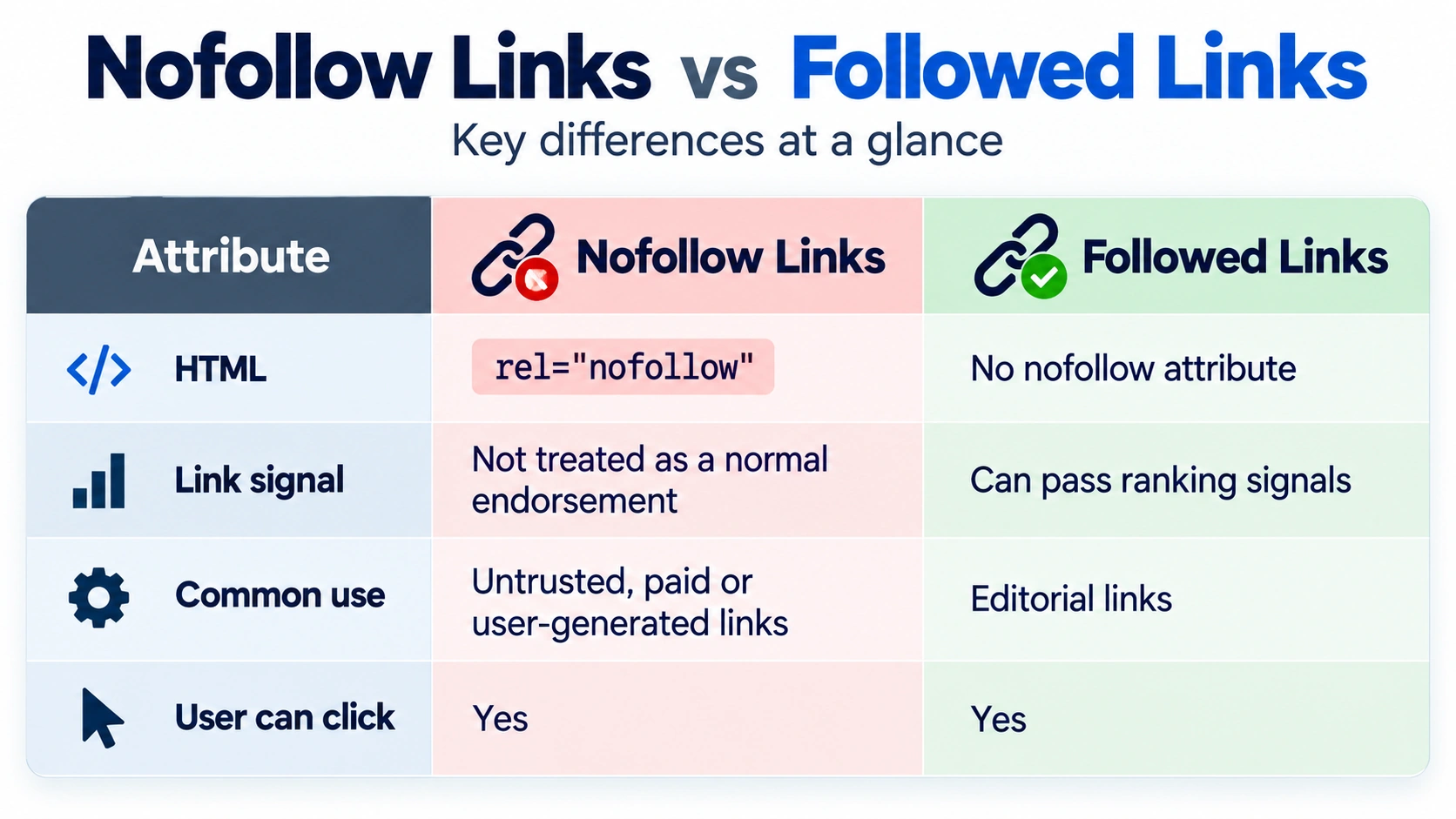
Nofollow vs. Followed Links
When Are Nofollow Links Used?
This type of link are commonly used in the following scenarios:
- Sponsored or Paid Links: If you’re linking to a website as part of a paid partnership or sponsorship, Google requires you to use the
nofolloworrel="sponsored"attribute to avoid penalties. - User-Generated Content: Links in blog comments, forums, and social media posts are often this type of link to prevent spammy link-building.
- Untrusted Content: If you’re linking to a site but don’t fully trust its credibility, using a nofollow link ensures you’re not endorsing it.
- Widgets and Infographics: Links embedded in widgets or infographics are often tagged with nofollow to prevent manipulation.
- Press Releases and Directories: Links in press releases, directories, or other syndicated content are often nofollow attributes to maintain compliance with Google’s guidelines.
Do Nofollow Links Still Matter for SEO?
Yes, these links can still provide value for SEO, although they work differently from followed links. They can bring referral traffic, increase brand visibility and help people discover your website.
1. Referral Traffic
Nofollow links can drive valuable referral traffic. If a nofollow link appears on a high-authority site, users may still click on it, increasing your website traffic and potential conversions.
2. Natural Link Profile
A natural backlink profile includes both dofollow and nofollow attributes. Having only dofollow links can look suspicious to search engines and may result in penalties for manipulative practices.
3. Brand Visibility and Trust
Links from reputable websites, even if nofollowed, can improve your brand’s visibility, trustworthiness, and credibility.
4. Indirect SEO Benefits
- Increased traffic from these types of backlinks can result in longer session durations, lower bounce rates, and increased user engagement-all of which are positive signals for SEO.
- High-quality these links may encourage other sites to link to you with the link.
5. Google’s Updated View on Nofollow
ince 2019, Google has treated nofollow as a hint rather than an absolute directive. Google now considers these types of backlinks as a hint for crawling and indexing purposes. This means that nofollowed links can, in certain cases, contribute to SEO in an indirect way.
How to Leverage Nofollow Links in Your SEO Strategy
To make the most of nofollow links, consider these tips:
- Focus on High-Quality Content: Create valuable, shareable content that naturally earns both dofollow and nofollow links.
- Engage in Guest Blogging: Contribute to reputable blogs and websites. Even if they include nofollow links, you gain exposure and drive traffic.
- Leverage Social Media: Links on social media platforms are often nofollow, but they can still drive traffic and increase brand awareness.
- Monitor and Audit Your Backlinks: Use tools like Google Search Console or Ahrefs to monitor your backlink profile and ensure a healthy balance of dofollow and nofollowed links.
- Participate in Forums and Communities: Engage in relevant forums, Q&A sites, and online communities. Adding value to discussions can help you gain these links and referral traffic.
Final Thoughts: Do Nofollow Links Matter for SEO?
Nofollow links still matter for SEO, but their value goes beyond passing ranking signals. They can generate referral traffic, increase brand visibility and help users discover your content.
Instead of focusing on getting a specific number of followed or nofollowed links, focus on earning relevant, useful and natural links. A well-rounded link-building strategy can support your website’s visibility and long-term SEO performance.